Best Seller
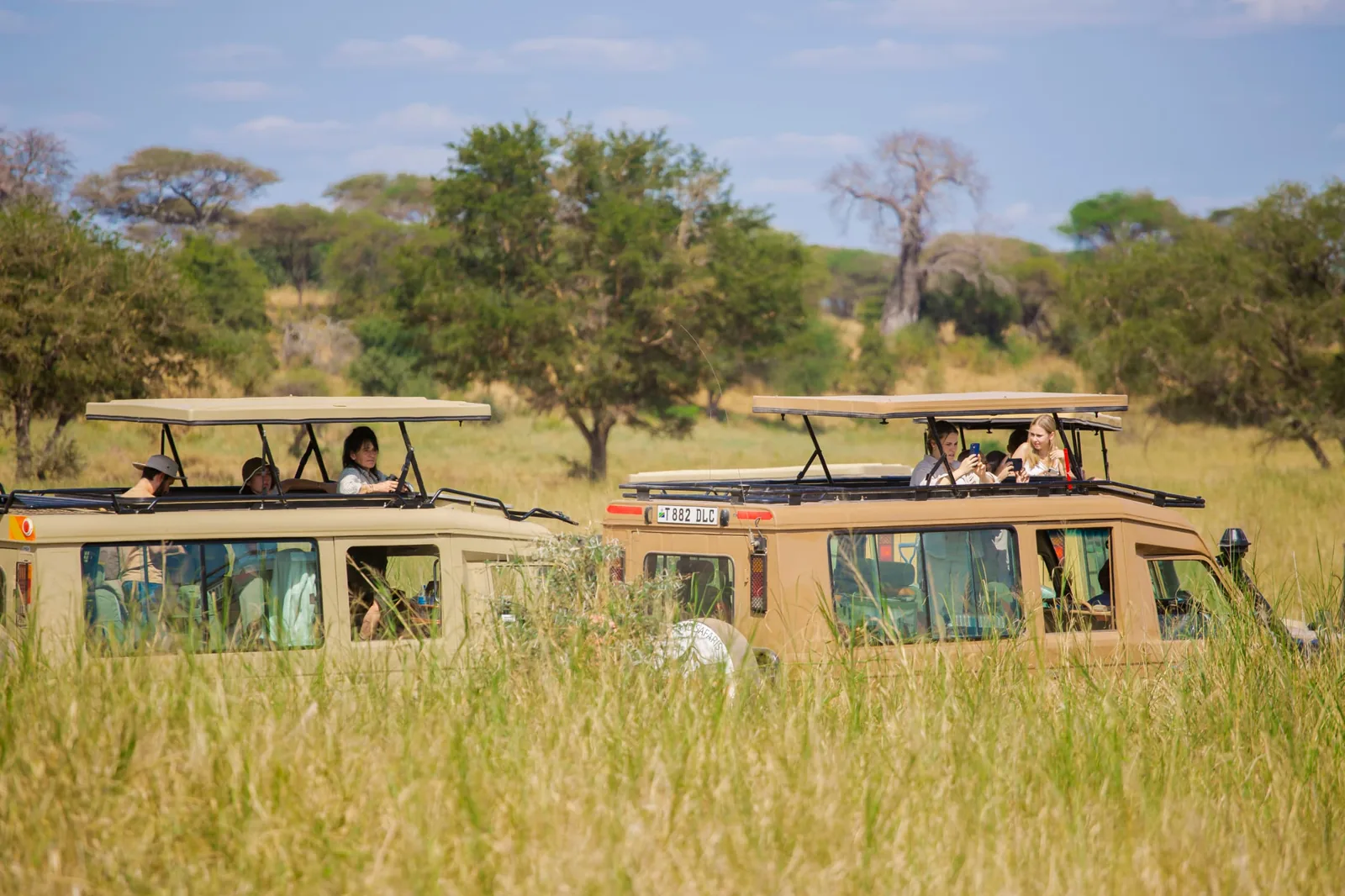
Tarangire National Park 2 Day Safari From Zanzibar
Tarangire National Park·Essential·2 days, 1 nights
Beach extension Family friendly
Perfect for couples & families
From
$850.00pp
2 days, 1 nights

Northern Circuit · Tanzania
Tanzania's elephant country: ancient baobabs, a lifeline river, and some of the northern circuit's quietest game drives, two hours from Arusha.
Overview
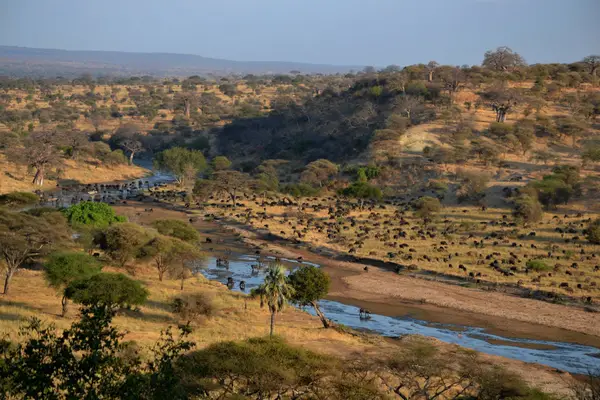
Tarangire National Park is a 2,850 km² park in northern Tanzania, about two hours' drive from Arusha, known for large elephant herds, centuries-old baobab trees and more than 550 bird species. In the dry season, from June to October, the Tarangire River becomes the only reliable water for miles and wildlife gathers along its banks in remarkable numbers.
For most of our guests, Tarangire is the first page of a northern Tanzania safari: an unhurried start before Ngorongoro and the Serengeti. Our guides know it as the park where you switch the engine off, wait, and let a herd of a hundred elephants walk past the vehicle.
Exceptional wildlife · A photographer’s favourite · Great for families
Country
Tanzania
Circuit
Northern Circuit
Guide price
From $350.00
How Tarangire National Park scores
Compare allThe travel guide
Last reviewed July 2026
Tarangire at a glance
Go to Tarangire for elephants, space and silence. In the dry season it holds one of the densest elephant populations in Tanzania, with herds of a hundred or more gathering at the river. It sees far fewer vehicles than the Serengeti or Ngorongoro, which makes it the best place on the northern circuit to slow down and simply watch.
The landscape is unlike anywhere else on a Tanzania safari: grey-trunked baobabs, red termite mounds, acacia woodland and the winding Tarangire River, which gives the park its name and keeps it alive through the dry months.
Field Notes
In the dry season, start around the Tarangire River. The animals know where the water is, so early in the morning you can find elephants, zebras, giraffes, and sometimes lions moving through the area. Go early because it is quiet and the light is beautiful. Before the day gets hot, the animals are more active, and you never really know what you might find around the next bend
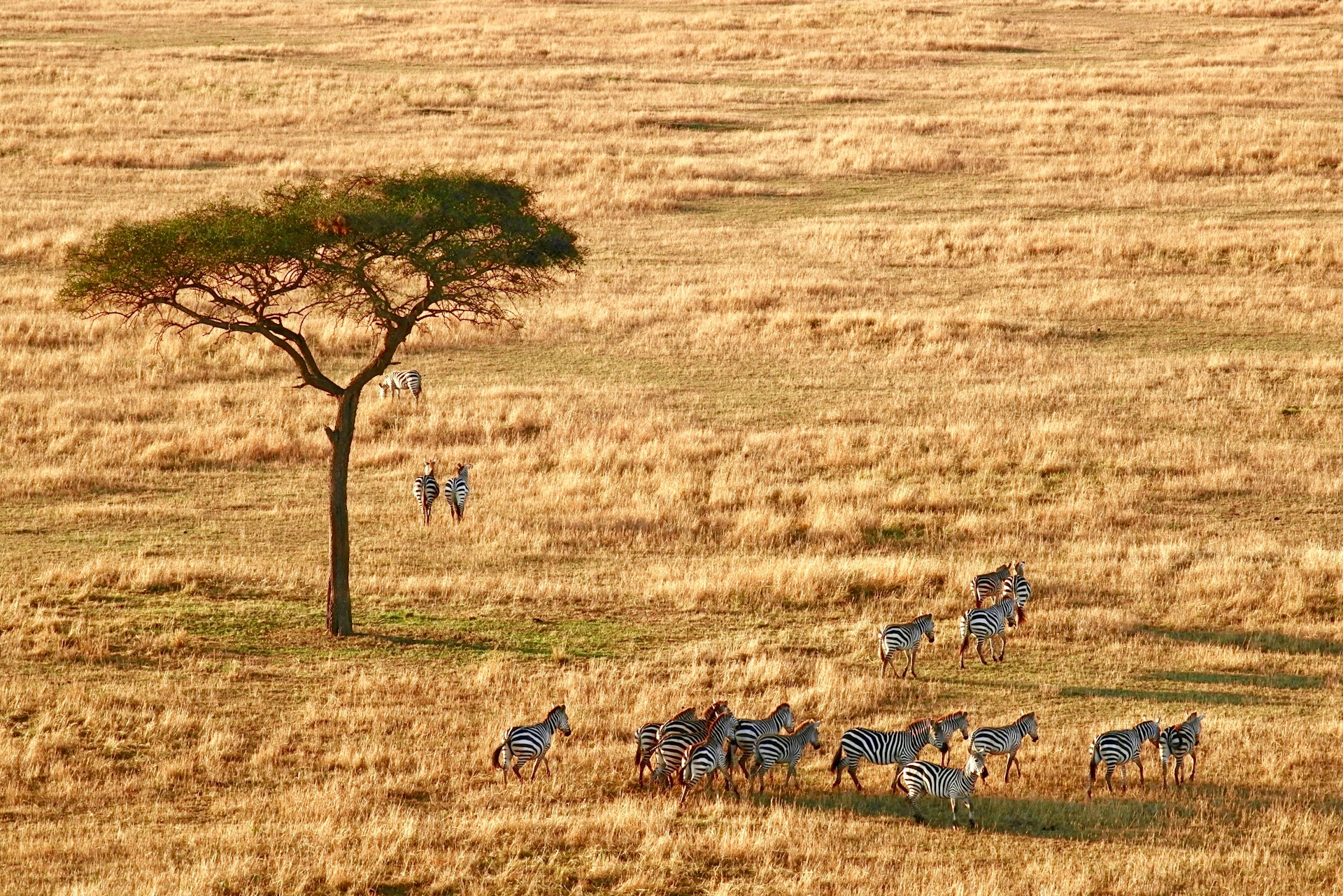
Elephants are the headline, but Tarangire's dry-season concentrations bring in far more: buffalo, zebra, wildebeest, giraffe, eland, impala and waterbuck along the river, with lion, leopard and cheetah following them. It is also one of the few northern parks where you may see fringe-eared oryx, gerenuk and lesser kudu, dry-country antelope that the Serengeti rarely offers.
For birders, Tarangire is a highlight of any Tanzania safari, with more than 550 recorded species. Look for the yellow-collared lovebird and ashy starling, both Tanzanian specialities, along with kori bustards, ground hornbills and raptors over Silale Swamp
Did You Know?
Tarangire's baobabs can live for many centuries and store thousands of litres of water in their trunks. The deep scars you'll see on the bark are made by elephants, which strip and chew it for moisture in the driest months.
The best time to visit Tarangire is the dry season, from June to October, when animals concentrate along the Tarangire River and game viewing is at its peak. From November to May many herds disperse onto the surrounding plains, but the park turns green, migrant birds arrive and you will often have sightings entirely to yourself.
| Months | Season | Wildlife | Why Go |
| June – October | Dry season | Peak: elephants and herds gather at the river | Best game viewing of the year |
| November – December | Short rains | Good; herds begin to spread out | Fewer vehicles, landscape turning green |
| January – March | Green season | Moderate; many grazers on outer plains | Superb birding, calving season, lush scenery |
| April – May | Long rains | Lower; some tracks muddy | Quietest months; some camps close |
Months
June – October
November – December
January – March
April – May
Guide's Tip
Late September and October are our favourite weeks in Tarangire. The river is at its lowest, so the action is concentrated in a few stretches, and the camps are calmer than in July and August.
The Tarangire River in the north of the park is where most dry-season drives begin, with the densest elephant gatherings and baobab-lined loops close to the main gate. Further south, Silale Swamp stays green when everything else is dry, drawing buffalo, elephants wading belly-deep, and the predators that follow them.
Beyond the park boundary, the Burunge and Randilen wildlife management areas let you do what isn't allowed inside: walking safaris, night drives and sundowners away from the main circuit. Staying in one is the easiest way to give your Tarangire days a different rhythm.
Where you stay shapes your Tarangire experience more than any other park on the circuit. Camps deep inside the park put you in the quiet south near Silale Swamp; camps in the neighbouring concessions add walking and night drives. We match the camp to how you like to travel.
Safaris
Private itineraries that visit Tarangire National Park or spend a night at one of its lodges.
Popular safaris
Tanzania·Classic·10 days, 9 nights
Perfect for couples & families
From
$3,150.00pp
10 days, 9 nights
Tanzania·prestige·4 days, 3 nights
Perfect for couples & honeymoon
From
$2,018.00pp
4 days, 3 nights

Tanzania·signature·10 days, 9 nights
Perfect for couples & families
From
$3,750.00pp
10 days, 9 nights
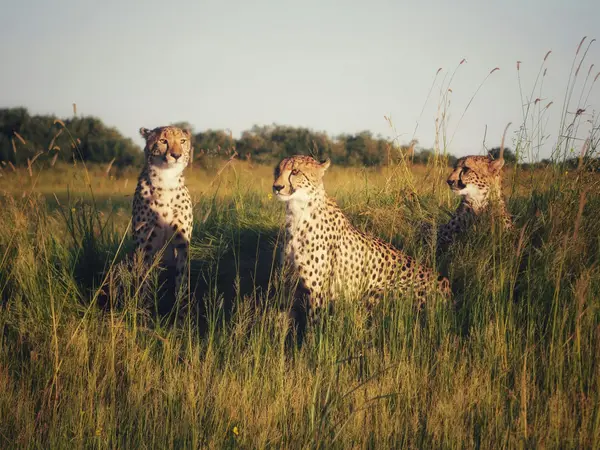
Tanzania·signature·10 days, 9 nights
Perfect for couples & families
From
$4,375.00pp
10 days, 9 nights
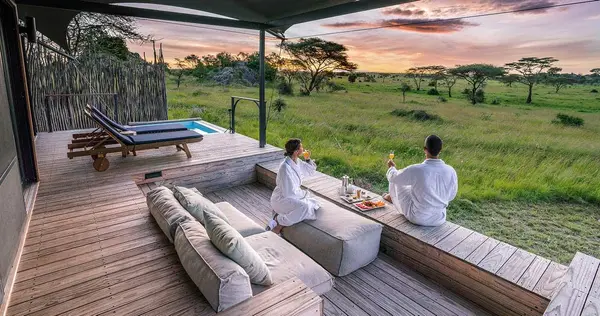
Tanzania·prestige·9 days, 8 nights
Perfect for couples & honeymoon
From
$8,200.00pp
9 days, 8 nights
Health & safety
Honest, practical guidance for your trip. See our full guide for more.
Tarangire is in a malaria area, so speak to a travel clinic about prevention before you travel. Tsetse flies are common in the park's woodland, particularly in the dry season; they are attracted to dark blue and black, so pack neutral, light-coloured clothing and insect repellent, and your guide will close windows where they're busiest. Game drives follow park rules: you stay in the vehicle except at designated sites. Walking safaris and night drives take place only in the community wildlife areas bordering the park, always led by an armed ranger and a qualified walking guide.
Health & vaccinations
Tarangire is in a malaria area. See a travel clinic 6–8 weeks before you travel about antimalarials and routine vaccinations. Tanzania asks for a yellow fever certificate if you arrive from, or transit through, a country with yellow fever risk. Tsetse flies are common in the park's woodland, especially in the dry season. They are drawn to dark blue and black, so pack light, neutral clothing and insect repellent. Drink bottled or filtered water, which our vehicles and camps provide.
Security
Tarangire and its camps are very safe for visitors. Use your tent or room safe for passports and valuables. After dark, wait for camp staff to escort you to and from your tent, because wildlife moves freely through unfenced camps. In Arusha, take normal city precautions and keep phones and cameras out of sight in busy areas.
Travel insurance
Comprehensive travel insurance is essential for any Tanzania safari, and it must include emergency medical evacuation. Check that your policy covers the activities you plan, such as walking safaris or a Kilimanjaro climb, and keep the emergency number with you during your trip.
Emergency contacts
Emnel Adventures (Arusha): +255 758500037 (WhatsApp) · safari@emneladventures.com. Your guide's direct number is shared in your pre-departure pack.
Good to know
Honest, specific answers to the questions we're asked most about this destination.
General
It's worth a proper stop — two nights minimum, in our view. A single rushed afternoon is the most common regret we hear from guests who later add Tarangire back into a return trip.
Approximately 2,850 km² (1,100 sq mi), making it considerably smaller than the Serengeti but larger than its immediate neighbour, Lake Manyara.
No — unlike the Serengeti and Ngorongoro, Tarangire does not carry a UNESCO designation. That doesn't reflect a lesser wildlife experience, simply a different international listing history.
Roughly two hours by road — the shortest transfer to any major park on the northern circuit, which is why it works well as a first or last night.
Wildlife
Very likely in the dry season (June–October), when herds of 200 or more concentrate along the river and Silale Swamp. In the wet season, elephant numbers in the park thin considerably as animals disperse more widely.
No — that behaviour is associated with neighbouring Lake Manyara, not Tarangire. Tarangire's lions are resident and reasonably reliable, but not known for climbing.
No resident black rhino population exists here. If a rhino sighting matters to your itinerary, Ngorongoro Crater offers considerably better odds.
Both are arid-country specialists at the southern edge of their range, and Tarangire is the only place in Tanzania where either is reliably seen — a genuine point of difference from the Serengeti and Ngorongoro.
Planning & Cost
Foreign visitors currently pay around USD 47.20 per adult per 24 hours in park fees, plus a separate concession fee of roughly USD 47–59 per adult per night for guests staying inside the park — both more moderate than Serengeti or Ngorongoro fees.
Yes — both are permitted here, unlike at the Serengeti or Ngorongoro, though only a handful of properties (Oliver's Camp and Swala among them) hold the necessary authorisation. This needs to be planned for specifically when choosing a lodge.
Most itineraries drive, since the transfer from Arusha is only around two hours — among the shortest on the circuit. Flying is available but rarely necessary unless combining several parks on a tight schedule.
Combining Destinations
Yes — this is one of the most common and efficient combinations on the northern circuit, since the two parks sit close together and offer genuinely different signature experiences.
Yes, and we frequently recommend it as exactly that, given its short transfer time from Arusha and its own distinct character rather than treating it as a warm-up for the Serengeti.
Yes — Oliver's Camp in southern Tarangire is built specifically around this, and we can weight an entire multi-night stay toward walking and night drives rather than standard game drives.
Keep exploring
Other places our local experts know and love across the region.
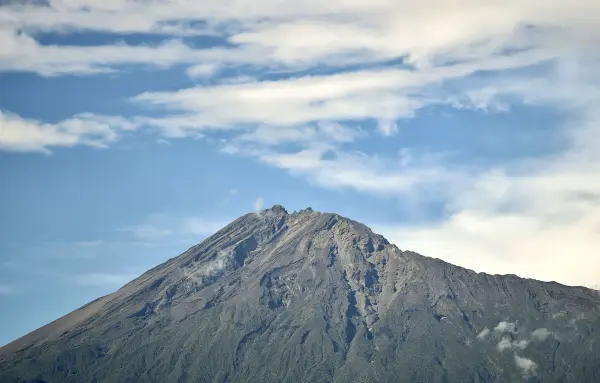
Arusha · Tanzania
Arusha is the gateway to northern Tanzania's safari circuit, set beneath Mount Meru and close to Arusha National Park. It is a natural starting point for private safaris, Kilimanjaro journeys and carefully planned Tanzania…
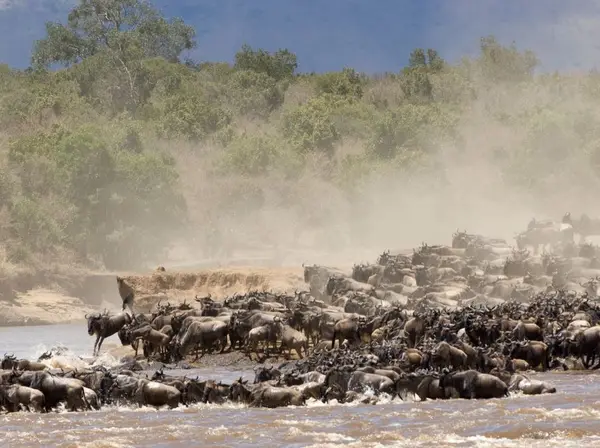
East Africa · Tanzania
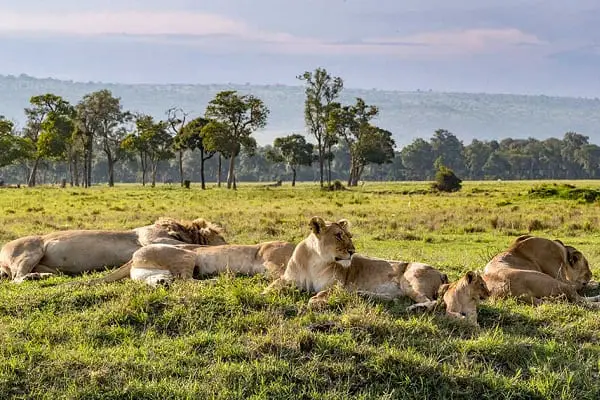
Serengeti National Park is Tanzania's legendary wildlife destination, famous for the Great Wildebeest Migration, exceptional big-cat sightings and vast open plains. Explore the Serengeti on a private safari designed around the…
East Africa · Tanzania
Tanzania is Africa's most complete safari country — the Serengeti and the Great Migration, the Ngorongoro Crater, Tarangire's elephants, the wild southern parks and Zanzibar's coast. Every Emnel safari here is private, and…
Northern Circuit · Tanzania
Northern Circuit · Tanzania
Coast & Islands · Tanzania
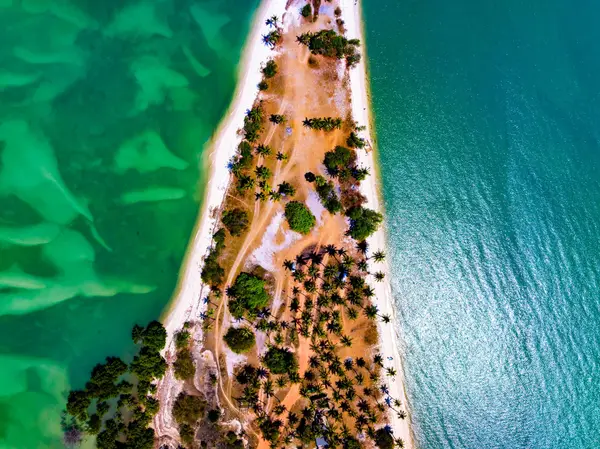
Tanzania's first marine park — a whale-shark stronghold, world-class diving on untouched reefs, and the quietest, most unhurried of the archipelago's islands.
Start planning
Tell us what you have in mind and a local expert will craft a tailored plan — no payment needed to start.